In March this year, analysis of the Home Office’s fire statistics by Direct365 revealed only a fraction of buildings have their fire safety standards checked annually. Just how many? Of the 2.5 million premises known to fire authorities, only 52,026 fire safety audits were conducted in 2024/25,
The research should serve as a warning to private landlords, whose properties fall under multiple fire safety laws, Acts and regulations. Regrettably, landlords may not know if their fire prevention measures are compliant until it is too late.
As letting agents and property managers, we keep buy-to-lets safe on behalf of our landlord clients. Our job is to read, understand and implement every fire safety compliance article. There are nuances that can catch landlords out, so professional support and consultation with the local authority is essential.
As a guide, these are the main fire safety laws a landlord needs to follow. This list is comprehensive but not exhaustive. Please get in touch for clarification of what aspects might apply to your buy-to-lets.
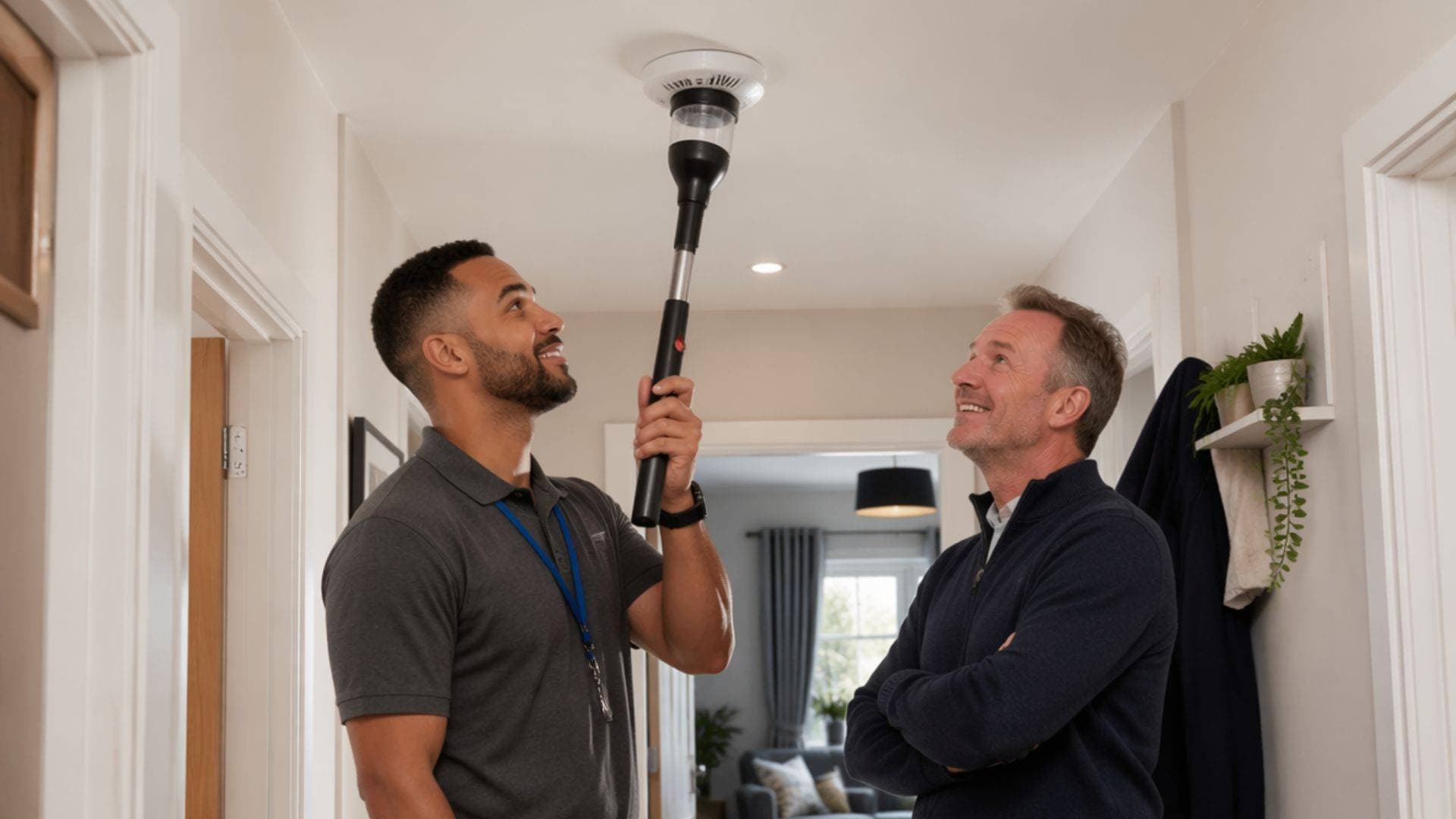
Smoke alarms: landlords across the UK are legally obliged to fit smoke alarms in their rental properties. There should be at least one on every floor. In Wales, smoke alarms must be interlinked and connected to an electrical supply.
In Scotland, landlords must have interlinked smoke alarms so they all turn on if just one is activated. Additionally, smoke alarms must be ceiling mounted and a heat detector installed in the kitchen. Smoke alarms in the UK must comply with BS EN 14604 and BS 5839-6.
Carbon monoxide alarms: carbon monoxide alarms are also a compulsory requirement across the UK’s privately rented properties. One should be installed in every room with a fixed-combustion appliance powered by gas, oil, coal or wood, although rooms with gas cookers are exempt in England and Scotland.
Any carbon monoxide alarm must meet British Standard EN 50291 and carry a British or European approval mark, such as a Kitemark.
Alarm testing: landlords are duty-bound to visit each of their rented properties at the start of a new tenancy to check that all alarms are working. They must identify alarms, audibly test them, take photographs and document the check. The landlord is responsible for repairing or replacing faulty alarms, although a tenant should arrange to replace any alarm batteries.
Landlords who breach the requirements set out in the Smoke and Carbon Monoxide Alarm (Amendment) Regulations 2022 can be fined up to £5,000 for each alarm breach.
Fire doors: fire doors are essential in preventing the spread of fire and smoke, giving tenants more time to escape in the event of an emergency. Not every buy-to-let property will need fire doors. Landlords who own a leasehold property in a block will normally find the flat’s individual front door is a fire door. This is usually the responsibility of the landlord, and it must be inspected annually.
The block owner, usually a freeholder, will be obliged to check communal fire doors on a more regular basis. How frequently and the checks required will depend on whether the block is classed as ‘small’ or ‘high rise’.
Houses in Multiple Occupation (HMOs): landlords with HMOs have their own set of fire safety rules in addition to smoke and carbon monoxide alarms. They can expect to fit a fire door to the kitchen, no matter the HMOs size.
In large HMOs, all doors that open onto escape routes, such as bedrooms and separate living rooms, must be fire doors. This also applies to the property’s main entrance door and cupboard/storage areas that house electrical meters or combustibles. Each local council will have its own HMO fire door guidelines, so always check.
A HMO landlord’s wider fire safety remit also includes taking reasonable steps to reduce fire risk and ensuring there is a clear escape route. They must also provide a written fire risk assessment and update it regularly. Some larger HMOs may also need emergency lighting, fire alarms and fire extinguishers.
Escape routes: good landlords will communicate the best escape route to renters in the event of a fire. Routes should be free from obstruction and clutter, which may mean asking tenants to remove bicycles and prams. Fire exits should be unlocked and open outwards. Signage, emergency lighting and clear assembly points may be required in HMOs and blocks of flats.
Furniture and furnishings: many landlords offer their properties part or fully furnished but they can’t add any old sofas or beds. All furniture and furnishings provided for the tenant must comply with Furniture and Furnishings (Fire Safety) Regulations 1988/1989, 1993 and 2010. Landlords providing second-hand furniture and furnishings must ensure it still has its fire safety labels attached.
Our team is here to keep your properties compliant and your tenants safe. Contact us for more guidance and advice.
Share this article



Sign up for our newsletter
Subscribe to receive the latest property market information to your inbox, full of market knowledge and tips for your home.
You may unsubscribe at any time. See our Privacy Policy.